

Africa Targets 2 Million Community Health Workers By 2030 As Nigeria Pledges 100,000
Dr. Nafisat Makinɗe, Abuja
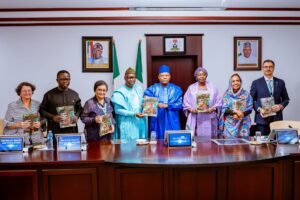
African countries are targeting the deployment of two million community health workers by 2030, with Nigeria pledging to recruit 100,000 salaried workers under the continental plan.
The Community Health Programme Continental Acceleration Plan 2026-2030 was launched in Abuja by Vice President Kashim Shettima, who represented President Bola Tinubu. The development was contained in a statement signed by Ado Bako, Assistant Director, Information and Public Relations, Federal Ministry of Health and Social Welfare. The initiative brings together 51 African countries and more than 30 partners. Tinubu serves as the African Union champion for human resources for health and the Community Health Delivery Partnership.
Shettima said community health workers play important roles in maternal health services, childhood vaccination, household health data collection and disease surveillance. He called for their legal recognition, regular remuneration and adequate institutional support, particularly for those serving underserved communities.
He said Nigeria would require an estimated 315,000 community health workers by 2030. To address the shortfall, the Federal Government plans to rehabilitate more than 17,000 primary healthcare centres, train 120,000 frontline health workers and recruit 100,000 salaried community health workers by the end of 2028, according to the ministry’s statement.
Shettima urged African governments to increase domestic funding for community health programmes and reduce reliance on external assistance. He also called for dedicated budgetary allocations, clear implementation plans and monitoring systems to track progress.
The Africa Centres for Disease Control and Prevention (Africa CDC) said the two-million-worker target builds on an African Union commitment to expand the continent’s community health workforce. Its 2026-2030 plan recorded 1,059,085 deployed workers as of May 2026. The agency estimates that achieving the target will require about $28 billion in cumulative investment, equivalent to approximately $4.3 billion annually under a phased financing framework. It projects that every dollar invested could generate up to $19 in economic and social benefits.
The Minister of State for Health and Social Welfare, Dr. Iziaq Adekunle Salako, commended Tinubu for approving Nigeria’s hosting of the forum. The Coordinating Minister of Health and Social Welfare, Prof. Muhammad Ali Pate, represented by Permanent Secretary Daju Kachollom S., reaffirmed the ministry’s commitment to primary healthcare under the Renewed Hope Agenda and the Nigeria Health Sector Renewal Investment Initiative.
In her vote of thanks, Kachollom acknowledged the African Union Commission, Africa CDC, development partners and other stakeholders. She said sustained funding and coordination would be necessary to implement the plan.