

Your Right To Emergency Care, Health Insurance: What Nigerian Law Guarantees
Dr. Nafisat Makinde, Abuja
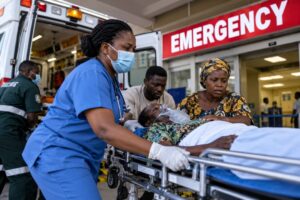
Nigerians can reduce their medical expenses by enrolling in health insurance schemes and checking their eligibility for government-supported healthcare services. The National Health Insurance Authority (NHIA) Act 2022 and the National Health Act 2014 provide legal frameworks for expanding healthcare access, protecting patients during emergencies and supporting vulnerable populations. These laws do not make every medical service free at every hospital, but they establish protections and funding arrangements that citizens should understand and use.
Section 20 of the National Health Act 2014 prohibits healthcare providers, health workers and health establishments from refusing emergency medical treatment. The provision states that a healthcare provider “shall not refuse a person emergency medical treatment for any reason whatsoever.” A violation can attract a fine of ₦100,000, imprisonment for up to six months, or both, upon conviction. This protection is intended to prevent patients requiring urgent care from being turned away because they cannot pay. It does not mean that all subsequent medical care must be provided free of charge.
Section 17(3)(d) of the 1999 Constitution directs the state to ensure adequate medical and health facilities for all persons. The provision falls under Chapter II, which contains the Fundamental Objectives and Directive Principles of State Policy. Under Section 6(6)(c), these provisions are generally not directly enforceable in court, subject to applicable legal exceptions. More specific statutory obligations are established by laws such as the National Health Act, which provides for emergency treatment and the financing of essential healthcare services.
The government established the Basic Health Care Provision Fund (BHCPF) under Section 11 of the National Health Act to strengthen primary healthcare and improve access to essential services, particularly for poor and vulnerable Nigerians. The law provides for an annual federal government grant of at least 1% of the Consolidated Revenue Fund, alongside contributions from development partners and other permitted sources. Official programme guidance identifies supported services such as antenatal care, childbirth, postnatal care, childhood immunisation, family planning and malaria treatment. Nigerians should ask their local primary healthcare centres whether they participate in the programme, which services are available and whether they qualify for support.
The NHIA Act 2022 established the National Health Insurance Authority to regulate and coordinate health insurance and expand coverage. The Act also provides for mandatory health insurance for residents of Nigeria, subject to its provisions. Insurance can help individuals and families manage medical expenses by providing access to covered services through accredited healthcare providers. Depending on the scheme, benefits may include consultations, diagnostic tests, medicines and hospital treatment. Coverage varies, and some services may be excluded or subject to limits. Enrollees should confirm their benefit package, contributions, eligibility requirements and approved hospitals before seeking treatment.
Workers should ask their employers whether they are enrolled in a recognised health insurance scheme and which dependants and services are covered. Self-employed Nigerians and families can contact the NHIA or their state social health insurance agency to enquire about available plans and enrolment requirements. State schemes may cover some or all costs for eligible residents, depending on the programme. Low-income and vulnerable Nigerians should also ask about eligibility for support through the BHCPF. Patients who believe a covered service has been wrongly denied can contact their health maintenance organisation, state health insurance agency or the NHIA through its official complaint channels. The NHIA publishes the following contact numbers for enquiries: 0805 928 2008 and 0806 574 4100.
The existence of these laws and programmes does not mean every Nigerian is insured or that every service is free. Citizens should check their eligibility, use accredited facilities and understand the terms of their coverage. Public awareness, transparent management of healthcare funds and enforcement of existing laws remain important to improving access. By understanding their rights and exploring available insurance and primary healthcare programmes, Nigerians can make informed decisions, reduce avoidable out-of-pocket expenses and seek assistance when they encounter difficulties accessing covered services.