

FG Seeks Private Investment To Keep Nigeria’s Health Facilities Powered
Dr. Nafisat Makinɗe, Abuja
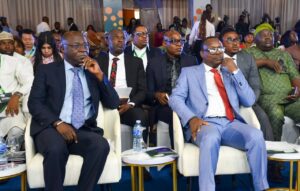
The Federal Government is seeking private investment, development finance and other funding to expand and maintain electricity supply in health facilities across Nigeria, Minister of State for Health and Social Welfare Dr. Iziaq Adekunle Salako said on Wednesday.
The remarks were contained in a statement signed by Ado Bako, Assistant Director, Information and Public Relations, Federal Ministry of Health and Social Welfare.
Salako spoke at the launch of the Renewable Asset Management Company (RAMCO) of the Rural Electrification Agency (REA) in Abuja. He said government funding alone would not be enough to provide and maintain the energy infrastructure needed across the health sector.
Between 60% and 70% of Nigeria’s primary and tertiary health facilities experience frequent power outages or have no electricity, while about 40% of functional primary healthcare centres have no electricity access, Salako said.
Most of the remaining facilities receive between six and 10 hours of electricity a day, he said. Teaching hospitals, which require between three and eight megawatts for optimal operations, receive about five hours of grid power daily and can spend 40% to 50% of their operating expenditure on energy, much of it on diesel.
Salako said electricity was essential to services including vaccine cold chains, oxygen concentrators, operating theatres and neonatal incubators.
The government has introduced renewable energy programmes to address the problem. Under the Energising Education Programme, federal tertiary health institutions, including teaching hospitals in Maiduguri and Calabar, have received renewable energy systems.
Another 100 health facilities have received 50-kilowatt containerised solar hybrid systems under the Nigeria Electrification Project, while a second phase is targeting 400 primary healthcare centres, he said.
President Bola Ahmed Tinubu approved the Nigeria Power-for-Health Initiative after a national stakeholders’ dialogue on power in the health sector in September 2025, Salako said.
The initiative targets steady electricity supply in at least 30% of Nigeria’s health facilities by the end of 2027.
But maintaining renewable energy systems after installation remains a challenge. More than 30% of solar systems installed in primary healthcare centres become non-functional within three years of commissioning, Salako said.
He attributed the failures to inadequate preventive maintenance, shortages of spare parts, insufficient budget provisions and unclear responsibility for the assets after projects are completed.
Salako proposed that health facilities be treated as a separate asset class within RAMCO’s portfolio, beginning with teaching hospitals and facilities that have already received government-backed renewable energy systems.
He also proposed linking RAMCO’s asset-management system with hospital energy-management teams and integrating its asset register with energy audits conducted across health facilities.
He called for part of the capital recycled through RAMCO to be directed towards primary healthcare centres, including facilities that may be less attractive to commercial investors but are important to maternal and newborn healthcare.
“For our part, the Federal Ministry of Health and Social Welfare commits to offering RAMCO a seat within the Inter-Agency Technical Committee of the Power-for-Health Initiative,” Salako said.
He said the ministry would work towards making electricity a dedicated budget line across healthcare levels, regularly update energy audits, enforce installation and certification standards, including NEMSA certification, and coordinate interventions by private-sector operators and development partners.
Salako said Nigeria’s 2027 health-sector electricity target would require more than installing new equipment.
“We will reach it by building assets that last, and by managing them as the national infrastructure they are,” he said.
He congratulated the REA, the Ministry of Finance Incorporated and Infrastructure Corporation of Nigeria on the launch of RAMCO and pledged the Health Ministry’s support for the initiative.
The statement was signed by Ado Bako, Assistant Director, Information and Public Relations, Federal Ministry of Health and Social Welfare.