

Nigeria Expands Sickle Cell Care With Six centres Of Excellence
Nafisat Makinde, Abuja
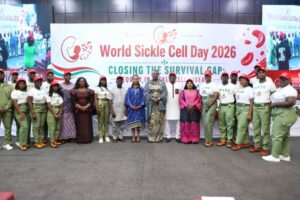
The Federal Government has established six Centres of Excellence for Sickle Cell Disease across the country’s six geopolitical zones to improve diagnosis, treatment and survival outcomes for people living with the condition.
Coordinating Minister of Health and Social Welfare Muhammad Ali Pate announced the initiative during a World Sickle Cell Day briefing in Abuja held under the theme, “Closing the Survival Gap: Equity in Sickle Cell Care,” according to a statement issued by Ado Bako, Assistant Director of Information and Public Relations at the Federal Ministry of Health and Social Welfare.
Represented by the ministry’s Permanent Secretary, Daju Kachollom, Pate said the centres have been equipped with High Performance Liquid Chromatography machines and other resources to strengthen newborn screening, diagnosis and comprehensive care.
Nigeria bears the highest burden of sickle cell disease globally, with about 25 percent of adults carrying the sickle cell gene and an estimated 100,000 infants dying annually from related complications, he said.
Pate said the government is implementing the Universal Newborn Screening Policy for Sickle Cell Disease in selected health facilities in Lagos, Kano and the Federal Capital Territory, while training primary healthcare workers to expand access to treatment nationwide.
He said the ministry had reviewed the National Guidelines for the Prevention, Control and Management of Sickle Cell Disease to strengthen evidence based interventions, including Hydroxyurea therapy, and had adopted Sicklescan technology to provide faster and more affordable screening.
“Sickle cell services are being integrated into primary healthcare platforms to improve access to counselling, screening, referral and treatment services at the community level,” Pate said.
The minister added that the ministry was working with the National Health Insurance Authority to include newborn screening, essential diagnostics and subsidised Hydroxyurea therapy in the national health insurance benefit package.
Director of Public Health Charles Nzelu described sickle cell disease as a major public health challenge, noting that only 50 percent of children born with the condition survive beyond age five. He urged Nigerians to know their genotype and seek genetic counselling before marriage.
Prof. Obiageli Nnodu, Director of the Centre of Excellence for Sickle Cell Disease Research and Training at the University of Abuja, said researchers had screened more than 38,000 babies in the Federal Capital Territory, established a registry containing more than 10,000 patients from 25 centres nationwide and trained more than 700 genetic counsellors across the country.