

Nigeria’s Noma Response Puts Prevention In Focus As FG Seeks N70bn Intervention Fund
Dr. Nafisat Makinɗe, Abuja
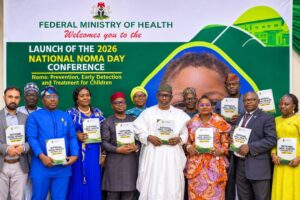
The Federal Government is seeking to mobilise N70 billion over five years to strengthen oral healthcare and prevent Noma, a disease that can destroy a child’s facial tissues and cause permanent disfigurement or death if not detected early.
The Minister of State for Health and Social Welfare, Dr. Iziaq Adekunle Salako, announced the National Oral Health Strategic Plan 2026–2030 on Monday at the commemoration of National Oral Health Week and National Noma Day in Abuja. The plan seeks to integrate oral healthcare into primary healthcare, maternal and child health, nutrition and school health programmes, while expanding preventive and treatment services across the country’s 774 local government areas.
Salako disclosed that more than 80 per cent of Nigerians had never visited a dentist, while two out of every three children lived with untreated dental caries. Nigeria has approximately one dentist for every 38,000 people, compared with the World Health Organisation’s recommended ratio of one to 7,500. He said Noma surveillance had been integrated into the Integrated Disease Surveillance and Response system, with frontline health workers, traditional healers and traditional birth attendants trained across 19 states to identify suspected cases and facilitate early referrals. He also announced that the Federal Executive Council had approved the National Centre for Oral Health Establishment Bill 2026 for consideration by the National Assembly.
The need for stronger surveillance was also highlighted by research presented at the conference. A systematic review found only eight primary studies documenting Noma across sub-Saharan Africa, six from Nigeria and two from Ethiopia, while eight of the 10 countries in the recognised Noma belt had no primary studies. Noma, also known as cancrum oris, often begins with gum inflammation but can rapidly destroy tissues of the mouth and face, causing severe disfigurement, disability and death. The World Health Organisation added the disease to its list of neglected tropical diseases in 2023 and called for stronger community surveillance, early diagnosis and psychosocial support, noting that malnourished children aged two to six were particularly vulnerable.
The consequences of delayed detection were reflected in figures presented by Médecins Sans Frontières (MSF) Medical Coordinator in Nigeria, Dr. Bukola Oluyide, who disclosed that 1,721 children had been admitted to the Noma Children’s Hospital in Sokoto over 12 years, comprising 868 boys and 853 girls. Sokoto, Zamfara and Kebbi recorded the highest admissions. She identified poverty, transport costs, insecurity and distance from healthcare facilities as barriers to timely diagnosis and treatment. In his goodwill message, MSF Country Representative, Dr. Aldikhari Ahmed, said the organisation’s partnership with the Federal and Sokoto State governments had facilitated 1,759 major reconstructive surgeries for 1,174 patients through 35 surgical missions. In 2026 alone, 114 surgeries were performed on 96 patients, while 28 Nigerian surgeons and 14 anaesthetists received specialised training. He called for sustained funding and effective implementation of surveillance and primary healthcare interventions.
At the Noma Centre in the National Hospital, Abuja, Country Director of Noma Aid Nigeria Initiative, Dr. Charles Ononiwu, disclosed that the facility had performed 457 reconstructive surgeries since its establishment, including more than 200 in 2026. However, research presented at the conference showed that physical reconstruction does not necessarily end the challenges faced by survivors. They may continue to experience stigma, social isolation and psychological distress, making counselling, family support and rehabilitation important components of long-term recovery.
Chairman of the Senate Committee on Health, Senator Ipalibo Harry-Banigo, reaffirmed the National Assembly’s commitment to strengthening primary healthcare, routine oral health screening and early diagnosis. She identified the Noma Children’s Hospital in Sokoto, the Intercountry Centre in Jos and the ongoing retrofitting of dental centres in federal university teaching hospitals as important parts of the national response. She also called for stronger legislative oversight to ensure that healthcare funding translates into services for affected communities. The Permanent Secretary of the Federal Ministry of Health and Social Welfare, Daju Kachollom, represented by her Senior Technical Assistant, Dr. Dogara Okara, emphasised frontline health worker training and sustained collaboration with development partners.
Beyond treatment, stakeholders identified good nutrition, exclusive breastfeeding, proper oral hygiene and prompt treatment of childhood illnesses, including measles and malaria, as important preventive measures. The government also highlighted efforts to connect vulnerable households affected by Noma to social protection programmes to reduce the financial burden of treatment and rehabilitation. Dr. Adebimpe Adebiyi mni, speaking on the legacy of the late Mama Ute Winkler-Stumpf, founder of Hilfsaktion Noma, recalled the organisation’s contribution to treatment infrastructure, including the Noma Centre in Abuja. The implementation of the new strategic plan, stakeholders said, will require sustained investment in prevention, early diagnosis and accessible treatment to reduce avoidable deaths and permanent disfigurement among Nigerian children.